
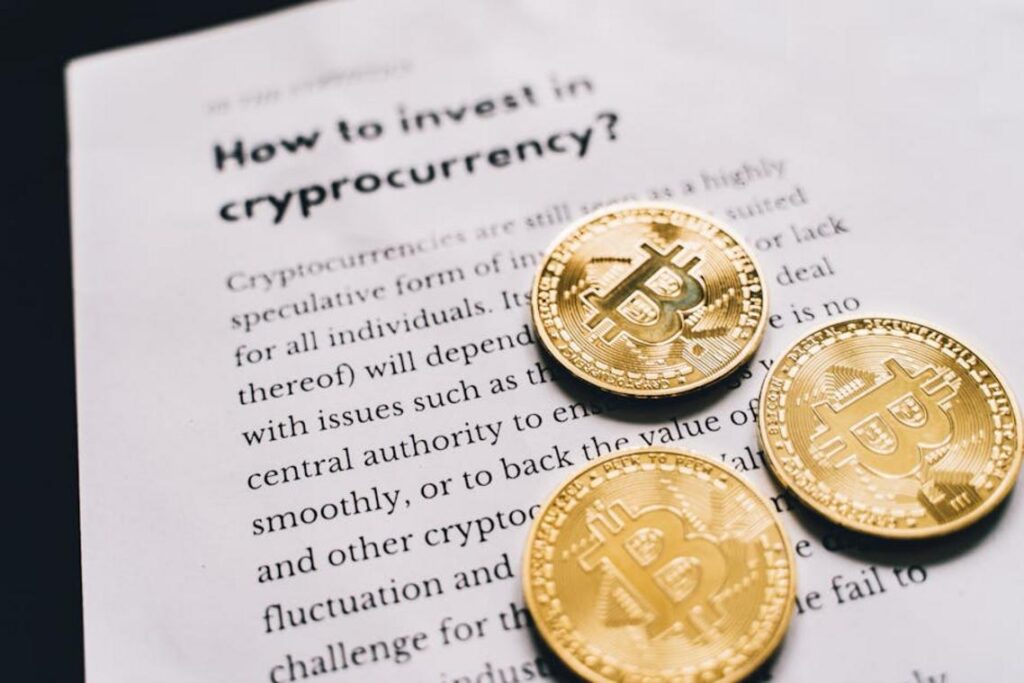
I’ve seen too many people lose money on their first crypto investment because they didn’t know where to start.
You’re probably here because crypto sounds interesting but the whole thing feels complicated. Maybe you’ve heard horror stories about hacks or scams. Or you just don’t know which platform you can actually trust with your money.
Here’s the truth: getting started with crypto isn’t as hard as it looks. But you do need to know what you’re doing before you put a dollar in.
I built this guide after researching dozens of platforms and their security protocols. I wanted to cut through the confusion and show you exactly how to make your first crypto investment without the stress.
This article walks you through the whole process. You’ll learn how to pick a platform that’s actually secure, how to set up your account the right way, and how to make your first purchase with confidence.
We’ve analyzed platform security measures and compared fee structures so you don’t have to. That’s how I know the cryptocurrency advice gscryptopia provides here will help you avoid the mistakes most beginners make.
You’ll get a clear path from zero to your first investment. No jargon dumps. No assumptions about what you already know.
Just the steps you need to get started safely.
Before You Invest: Core Crypto Concepts for Beginners
You can’t invest in something you don’t understand.
I see people skip this step all the time. They hear about someone making money on crypto and jump straight to buying without knowing what they actually own.
That’s backwards.
What is Cryptocurrency?
Think of it as money that exists only in digital form. No banks control it. No government prints it. Cryptography (complex math) secures every transaction on a decentralized network.
That means no single person or company can just change the rules.
Understanding Blockchain
Here’s how I explain it. Imagine a notebook that everyone can read but nobody can erase. Every transaction gets written down and copied to thousands of computers at once.
Want to change something? You’d need to hack thousands of machines simultaneously. Good luck with that.
Key Asset Types
Bitcoin acts like digital gold. People buy it to store value.
Ethereum runs smart contracts (programs that execute automatically when conditions are met). It’s more like a platform than just currency.
Then you’ve got altcoins. These are projects built for specific problems. Some are good. Most aren’t.
Focus on the ‘Why’
I’m going to be blunt here.
Price doesn’t tell you anything about whether a project is worth your money. I’ve watched coins pump 1000% on nothing but hype, then crash just as fast.
Before you invest, ask what problem this cryptocurrency advice gscryptopia actually solves. Who uses it? Why does it need to exist?
If you can’t answer those questions, you’re just gambling.
The Anatomy of a Reputable Crypto Platform
I’ll never forget the first time I got locked out of a crypto exchange.
It was 2019. I had a decent chunk of Bitcoin sitting there and the platform just went dark. No warning. No customer service. Just radio silence for three days.
That’s when I learned what really matters in a crypto platform. And it’s not the flashy interface or the promises of low fees.
Now some people will tell you that all exchanges are basically the same. They’ll say just pick whichever one has the lowest trading costs and call it a day.
But that’s how you end up like I did. Staring at your screen at 2 AM wondering if your money is gone forever.
The truth is simpler than most platforms want you to believe. A reputable exchange comes down to a few things that should be standard but often aren’t.
Security First: The Pillars of Protection
Two-factor authentication isn’t optional anymore. It’s the bare minimum.
If a platform doesn’t require 2FA, walk away. I don’t care how good their marketing looks or how many coins they offer. You’re one phishing email away from losing everything.
But here’s what separates the good platforms from the great ones.
Cold storage. The best exchanges keep most user funds offline where hackers can’t touch them. We’re talking 90% or more in cold wallets that aren’t connected to the internet.
Some platforms go further and offer insurance against breaches. It’s not common but when you see it, that tells you something about how seriously they take protection.
Regulatory Compliance and Transparency
I know regulations sound boring. Trust me, I get it.
But when a platform is registered with FinCEN or similar bodies, they’re playing by actual rules. That means audits. Oversight. Someone watching to make sure they’re not running off with your funds.
You want to see clear fee structures too. If you have to dig through five pages to figure out what a withdrawal costs, that’s a red flag.
Reputable platforms put their fees right there on the main page. Trading costs, deposit fees, withdrawal charges. Everything upfront.
(Hidden fees are how sketchy exchanges make their real money, by the way.)
User Experience and Support
Here’s where I see beginners make mistakes.
They think a complicated interface means the platform is more professional. Like complexity equals security or something.
Wrong.
The best platforms make things simple. You should be able to figure out how to invest bitcoin for beginners gscryptopia style without needing a computer science degree.
But the real test? Try contacting customer service before you deposit a single dollar.
Send them a question. See how long it takes to get a real answer from a real person. Because when something goes wrong at 3 AM and you need help, you’ll want to know someone’s actually there.
I learned this the hard way with that 2019 lockout. The platforms that responded within hours earned my business. The ones that took days or never replied? I never went back.
Following cryptocurrency advice gscryptopia means paying attention to these details before you commit your money. Not after.
Your 5-Step Guide to Making Your First Crypto Investment
I still remember my first crypto purchase.
I sat there staring at the buy button for probably ten minutes. My finger hovered over my mouse like I was defusing a bomb or something.
Was I doing this right? Would I lose everything? Did I pick the right platform?
You might be feeling the same way right now. That’s normal. The first trade is always the hardest because you don’t know what you don’t know.
But here’s what I learned. The process itself isn’t complicated. You just need to take it one step at a time and not skip the boring parts (especially the security stuff).
Let me walk you through exactly how to do this.
Step 1: Select Your Platform
You’ve already done your research using the criteria we covered earlier. Now it’s time to commit.
Pick a platform that checks your boxes for security and ease of use. If you’re still torn between two options, go with the one that feels more intuitive when you click around.
I chose Coinbase for my first purchase because the interface didn’t make my head hurt. Was it the cheapest option? No. But I needed something I could actually figure out without a manual.
Step 2: Create and Secure Your Account
Sign up is pretty standard. Email, password, the usual stuff.
But here’s where most people mess up. They skip two-factor authentication because it seems like extra work.
Don’t do that.
The second you create your account, turn on 2FA. Use an app like Google Authenticator or Authy. SMS codes work but they’re not as secure (your phone number can be hijacked easier than you think).
This takes maybe three minutes and it’s the difference between keeping your money and watching someone drain your account while you sleep.
Step 3: Complete Identity Verification
Yeah, I know. You have to upload your driver’s license and maybe a selfie.
Some people hate this part. They think crypto should be anonymous and that KYC laws (Know Your Customer) defeat the whole purpose.
Here’s the counterargument though. Legitimate platforms follow these rules because they have to. It’s actually a good sign. The sketchy exchanges that don’t ask for ID? Those are the ones that disappear overnight with everyone’s funds.
You’ll typically need a government ID and proof of address. The whole process usually takes a few hours to a day for approval.
Step 4: Fund Your Account
Now you need to get actual money into your account.
You’ve got a few options here. ACH bank transfers are the slowest but they’re usually free or cheap. Wire transfers are faster but you’ll pay more in fees. Debit cards are instant but come with the highest fees.
I went with ACH for my first deposit because I wasn’t in a rush and didn’t want to pay extra. It took three days but saved me about $15 in fees.
If you’re trying to catch a specific price point, the wait might kill you. In that case, pay the fee for speed. Otherwise, save your money and be patient.
Step 5: Execute Your First Trade
This is it. The moment you’ve been building up to.
You’ll see two main options when you go to buy. A Market Order and a Limit Order.
Market Order means you buy right now at whatever the current price is. You click buy, you get your crypto immediately. Simple.
Limit Order means you set a specific price you’re willing to pay. If the price hits that number, your order goes through. If it doesn’t, you wait.
For your first purchase, I’d go with a Market Order. You want to get this done and see how it feels to actually own crypto. Once you’re comfortable, you can start playing with Limit Orders to try and get better prices.
(I still use Market Orders most of the time because I’m not trying to save three dollars on a purchase. But that’s just me.)
One more thing. If you’re wondering which crypto to invest in with 1000 dollars gscryptopia, start small with your first trade. Buy $50 or $100 worth just to learn the process. You can always buy more later.
The goal right now isn’t to get rich. It’s to stop being paralyzed and actually do the thing.
You’ve got this.
Common Pitfalls and How to Avoid Them
You’re going to make mistakes.
I did. Every investor I know did too.
But some mistakes cost more than others. And in crypto, the expensive ones can wipe you out completely.
FOMO Will Destroy Your Portfolio
I watched Bitcoin jump from $30k to $40k in two weeks back in 2023. My inbox flooded with messages from people who bought at $39k because they couldn’t stand watching it climb anymore.
You know what happened next.
A study from the Cambridge Centre for Alternative Finance found that 73% of retail crypto investors who bought during price spikes sold at a loss within six months.
Here’s what works better. Write down your plan before you buy anything. Set your entry price. Set your exit price. Then stick to it even when everyone around you is panicking or celebrating.
Some people say planning takes the excitement out of investing. That you should trust your gut and jump on opportunities when you see them.
But your gut doesn’t have access to historical data. It just knows that watching numbers go up feels good.
Never Invest What You Can’t Lose
This isn’t just cryptocurrency advice gscryptopia throws around to cover liability.
It’s math.
If you put in $10k that you need for rent, you’re not making investment decisions anymore. You’re gambling under pressure. And pressure makes you sell at the worst possible times.
Define your risk tolerance before you invest a dollar. I keep my crypto allocation under 15% of my total portfolio. Some people go higher. Some go lower. But everyone who survives long term has a number.
Your Exchange Account Isn’t a Savings Account
Not your keys, not your coins.
You’ve probably heard that phrase. But do you know why it matters?
In 2022, FTX collapsed. Users who kept funds on the exchange lost access overnight. Some still haven’t recovered their money.
Bloomberg reported that $8 billion in customer funds vanished when FTX filed for bankruptcy.
If you’re holding crypto long term, move it to a hardware wallet. Yes, it’s an extra step. Yes, you have to manage your own security.
But at least you actually own what you bought.
Investing with Strategy, Not Speculation
You came here confused about where to start with crypto investing.
I get it. The fear of picking the wrong platform or losing money to a scam is real. But that confusion doesn’t have to stop you.
You now have a framework that works. Security comes first. Understanding the basics matters. Following a methodical process keeps you safe.
The crypto market isn’t as scary when you know what to look for. Research beats guessing every time.
Here’s what you do next: Take the criteria I’ve given you and start evaluating platforms. Compare their security features and fee structures. Read user reviews from multiple sources.
Then start small. You don’t need to go all in on day one.
Put in a modest amount while you learn how everything works. Watch how the market moves. Study how different coins behave. Build your knowledge as you build your portfolio.
GS Cryptopia gives you the information you need to make smart decisions. We focus on practical advice that actually helps you move forward.
The crypto space rewards people who do their homework. Your next step is to take what you’ve learned here and put it into action.
Start your research today. Your future self will thank you for being careful now.